Self-care needs community
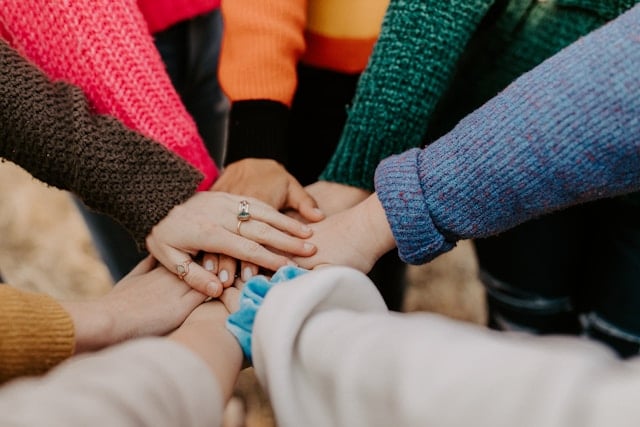
In today’s podcast we debunk the damaging belief that self-care is something we should be able to manage on our own. The reality is that couldn’t be further from the truth.
As women, we are inundated by messages (implicit and explicit) aimed at making us believe that our worth is tied to our appearance (thin, some arbitrary social construct of “pretty”), our demeanour (happy, calm), and our caregiving (generous and attentive to others’ needs, no matter the cost to ourselves).
And, of course as therapists, our worth as caregivers is only further amplified.
Unfortunately, buying into this set of beliefs, aka Human Giver Syndrome (read more about that in Emily and Amelia Nagoski’s book entitled Burnout: The Secret to Unlocking the Stress Cycle), reinforces beauty focused self-care and makes us vulnerable to feelings of inadequacy, resentment, and to burnout.
At the same time, however, it’s important to appreciate the incredibly important contributions we make in our caregiving roles, both in our professional and personal lives. As Emily and Amelia Nagoski point out:
“Giving and being a giver are not dangerous or harmful when you’re surrounded by other givers. That’s actually a perfect way to create an equitable society where no one falls through the cracks, because everyone feels an obligation to care for others.” (p. 68, The Burnout Workbook, 2023)
But, of course, we are not surrounded by other (equitable) givers. We are surrounded by others, regardless of gender, who have also been influenced, knowingly or unknowingly, by these unhelpful beliefs. And the women we work with are just as susceptible as we are to buying into the Human Giver Syndrome and to judging themselves and others based on those qualities.
Believing that we can work against these influences on our own is naïve. The reality is we need to surround ourselves with like-minded women who recognize our inherent worth as human beings and who support truly meaningful self-care that is aligned with the realities of being a female mental health therapist.
So, as you enter 2026, consider a different kind of new year’s resolution. The kind that gains strength and momentum in numbers. The kind that can create a new culture of self-care for women who give so very much to those around them:
We will be there for one another by acting in ways that challenge unhelpful messages about our worth and by extending the same level of care to ourselves that we do to our clients and loved ones.
Where will your reflactions take you?